
RELIEF THAT LASTS
The Connection Between TMJ, Sleep & Headaches
TMJ symptoms are often about more than the jaw alone. Clenching, grinding, airway restrictions, sleep apnea, headaches, migraines, and muscle tension can all be related.
That's why our providers take a broader view of diagnosis and treatment to help uncover contributing factors and support lasting relief.


UNDERSTANDING TMJ
Because TMJ symptoms often show up as headaches, ear ringing, or neck pain, many people never connect them to their jaw and go years without relief. Our approach looks beyond the symptoms to address the underlying bite and muscle issues, so we can help you find lasting comfort rather than a temporary fix.
OUR APPROACH
Treatment Options for TMJ, Migraines & Facial Pain
Treatment may include one or a combination of therapies, depending on your symptoms and diagnosis.
Take-Home Sleep Testing
Custom Oral Appliances
Therapeutic Botox
Muscle Relaxation Therapy
Signs & Symptoms of TMJ Disorder
TMJ disorder can show up in many ways, including:
- Jaw pain, popping, clicking, or limited opening
- Facial muscle soreness or tension
- Chronic headaches or migraines
- Clenching and grinding
- Ear-related symptoms, including pressure or tinnitus
- Neck pain and referred facial discomfort
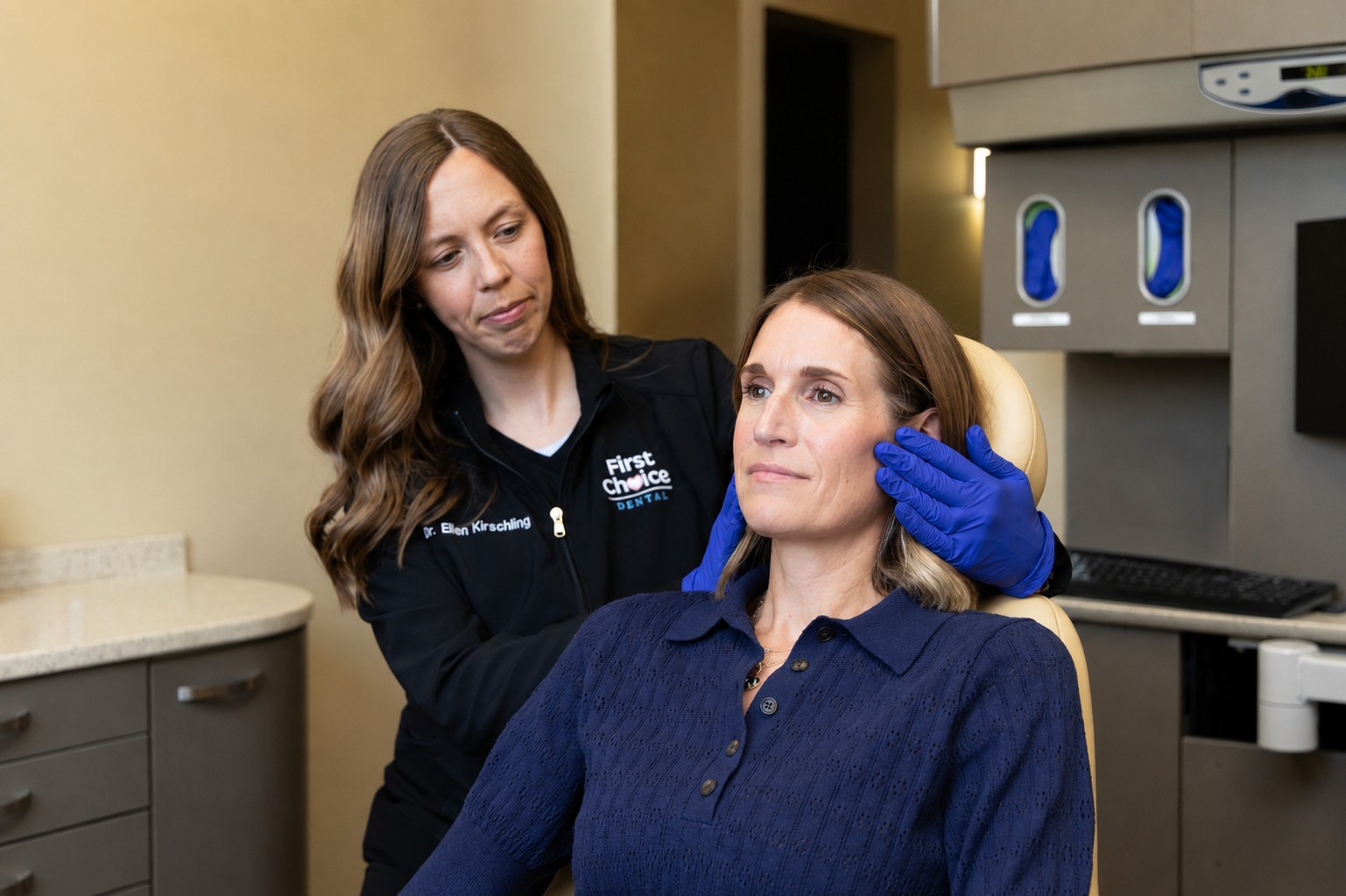
Why Choose First Choice Dental for TMJ & Facial Pain Relief
What differentiates this care is the comprehensive approach and range of therapies available in one place. Patients have access to:
- Providers with advanced training and certification in TMJ and airway-related treatment
- Custom oral appliances and orthotic therapy
- Therapeutic Botox for symptom relief
- Take-home sleep testing
- Personalized treatment focused on long-term relief, not symptom management alone
Meet Our Providers









A TMJ disorder affects the temporomandibular joints that connect the lower jaw to the skull, along with the surrounding muscles, ligaments, and bite. Problems in these areas can cause jaw pain, clicking, headaches, facial tension, limited movement, and other symptoms.
Headaches may be connected to the jaw when they occur alongside clenching, grinding, jaw soreness, facial muscle tension, tooth wear, ear pressure, or neck pain. Because these symptoms can have several causes, a thorough evaluation is needed to determine whether the jaw, bite, muscles, sleep, or airway may be contributing.
Clicking or popping should be evaluated if it is accompanied by pain, swelling, locking, limited opening, headaches, or changes in your bite. An examination can help determine whether the joint is functioning properly or showing signs of strain.
Your provider will review your symptoms, health history, bite, jaw movement, muscle tenderness, clenching or grinding habits, and other contributing factors. The evaluation may also include dental imaging, an assessment of your airway, or take-home sleep testing when sleep-disordered breathing is suspected.
Treatment depends on the cause and severity of your symptoms. It may include a custom oral appliance, orthotic therapy, therapeutic Botox, muscle relaxation therapy, changes to certain habits, or evaluation of sleep and airway concerns. Some patients benefit from a combination of treatments.
A custom appliance may help support a healthier jaw position, reduce strain on the joints and muscles, or protect the teeth from grinding and clenching. Unlike an over-the-counter nightguard, it is designed specifically for your bite and treatment needs.
Therapeutic Botox may be used to relax overactive muscles involved in clenching, grinding, jaw tension, and certain headache patterns. It can reduce muscle strain and provide symptom relief, but it may be used alongside other therapies when an underlying bite, joint, sleep, or airway issue also needs attention.
Sleep-disordered breathing may contribute to nighttime clenching, grinding, muscle tension, poor sleep, and morning headaches. Because these symptoms can overlap with TMJ disorders, your provider may recommend a take-home sleep test to better understand whether airway or sleep concerns are part of the problem.
The timeline varies based on the cause of the symptoms, how long they have been present, and the type of treatment used. Some patients notice improvement relatively quickly, while chronic or complex conditions may require adjustments and care over a longer period.
Coverage varies by insurance plan and treatment type. Some services may fall under dental insurance, while others may be considered medical treatment or excluded from coverage. First Choice Dental can help review your benefits and explain expected costs before treatment begins.
Ready to Find Relief?
If jaw pain, headaches, migraines or facial tension are affecting your quality of life, we're here to help you explore solutions designed for lasting relief.